The Parish is Founded
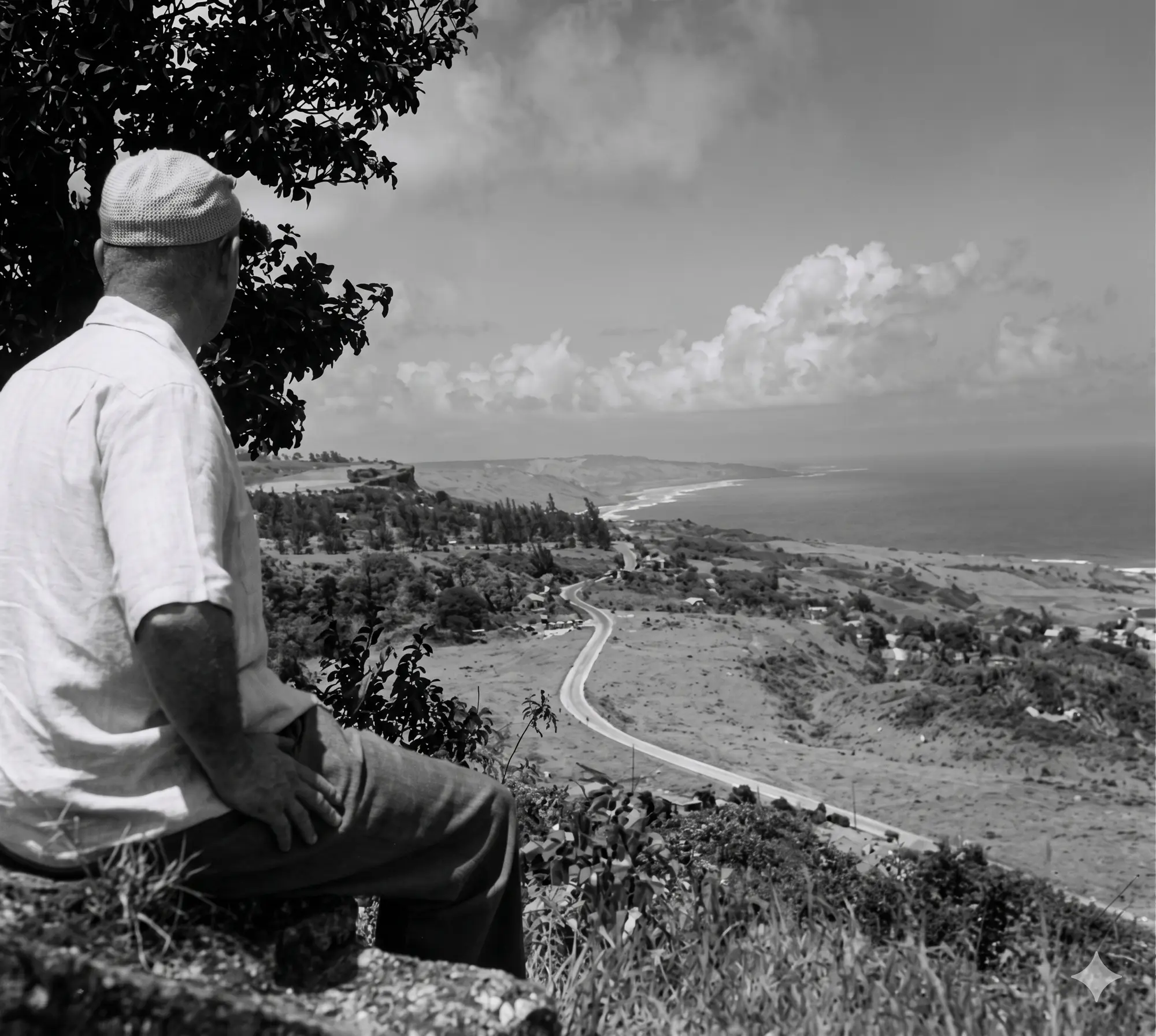
St. Joseph is established as one of the eleven original parishes of Barbados, carved into the island's rugged eastern coastline. Its dramatic hills and Atlantic-facing cliffs set it apart from every other parish on the island.
Lend your time and talent to the parish. Tell us a little about yourself and the committee will be in touch.
Scroll through the story of Barbados' most dramatic parish — from colonial signal towers to world-famous surf, told one moment at a time.
St. Joseph is established as one of the eleven original parishes of Barbados, carved into the island's rugged eastern coastline. Its dramatic hills and Atlantic-facing cliffs set it apart from every other parish on the island.
Plantations spread across the parish's steep terrain, part of the region known as the Scotland District for its resemblance to the Scottish Highlands. The unstable soils made farming here uniquely challenging — and the landscape uniquely beautiful.
The Cotton Tower is erected on Hackleton's Cliff as part of a chain of military signal stations spanning the island. From its commanding height, messages could be relayed across Barbados in minutes — an engineering marvel of its day.
A catastrophic hurricane devastates Barbados, destroying the St. Joseph Parish Church along with much of the parish. The community rallies, and the church is rebuilt by 1839 — a Gothic structure that still stands watch over the parish today.
Full freedom comes to the enslaved people of Barbados. In St. Joseph, free villages begin to take root in the hills, and the fishing village of Bathsheba grows along the coast as families build new lives on their own terms.
The Barbados Railway winds its way through the Scotland District to Bathsheba, turning the rugged coast into the island's favourite seaside escape. Day-trippers flock east for sea baths, picnics, and the famous Atlantic views until the line closes in 1937.
Horticulturist Iris Bannochie founds Andromeda Botanic Gardens on a hillside overlooking Bathsheba. Her collection of tropical plants from around the world earns international acclaim and remains one of the Caribbean's great gardens.
Barbados becomes an independent nation on November 30th, 1966. St. Joseph's communities — from Blackmans to Bathsheba, Sugar Hill to Horse Hill — celebrate as the broken trident rises over a new chapter in the island's story.
Bathsheba's legendary "Soup Bowl" break earns its place among the world's great surfing waves. International competitions bring surfers from every continent to St. Joseph's shores, and surf culture becomes part of the parish's identity.
Barbados becomes a republic, with a Barbadian head of state for the first time. St. Joseph looks forward — investing in its people, its heritage sites, and a thriving community of local businesses and entrepreneurs.
From the Flower Forest to Joe's River, from Hackleton's Cliff to the Bathsheba coast, St. Joseph remains the most breathtaking corner of Barbados — a parish where history is not behind us, but all around us.
The story of St. Joseph is still being written — by its people, its businesses, and its visitors.